
How To Choose The Right Gold For You
Shopping for gold jewelry can be confusing. There are different colors of gold, different karat weights of gold - not to mention all the styles of jewelry to choose from.
There is no single type or karat of gold used to create gold jewelry. And jewelry is rarely made with pure 24 karat gold.
Gold purity, also called gold karat or karat weight, is an important factor when choosing a piece of gold jewelry. The most common levels of gold purity are 18K gold, 14K gold and 10K gold. Each karat weight has its own advantages and disadvantages, including hardness, strength and durability. Consider these options when choosing the right gold karat weight for your needs.
18K Gold: Advantages and Disadvantages
- Advantages: The purest gold for practical jewelry use; has amazing depth of color.
- Disadvantages: Is an expensive karat weight; is easily scratched.
As you know, 18 karat gold is made of 75% pure gold and 25% alloy metal. This karat gold is the purest form used for jewelry, including rings, watches and chains.
18 karat gold has a rich, warm yellow appearance. It is the most deeply hued of all the common gold levels and has the rich look most people associate with fine jewelry. Also, since 18K gold is 75% pure, there is very little risk of jewelry made with it creating any skin irritation or allergy.
One disadvantage to choosing jewelry created with 18 karat gold is that it is susceptible to scratching and even denting. Because gold is a naturally soft metal, and 18K gold is 75% pure, it can be easily scratched with daily wear. Depending on the jewelry style and one's daily activities, jewelry made with 18 karat gold can even be dented or broken.
Additionally, 18K gold is significantly more expensive than 14K or 10K gold. While it's beautiful, it's cost may put it out of range for many people. If you desire gold jewelry that's as pure as possible, then 18 karat gold is a good choice. Just remember that it's not as durable as other karat weights and will be more expensive.
All in all, 18k gold is a good choice if you want gold jewelry that's as pure as possible while still offering some practicality. However, it's not the best option if you need a ring that's very durable, or if you're on a limited budget.
14K Gold: Advantages and Disadvantages
- Advantages: 14K gold is very durable, still contains a high rate of pure gold and is a good and value for the money.
- Disadvantages: May cause skin irritation. Will be more expensive than 10 karat gold.
The most popular karat weight of gold is 14K. This purity level means that the alloy contains 58.3% gold and 41.7% other metals, like silver, copper, nickel and zinc.
Jewelry made with 14 karat gold has a nice, even, mid-tone color. It's no wonder that roughly 90% of all engagement and wedding rings are made with this karat gold.
When compared to 18 karat gold, 14 karat gold features more durability because it contains less pure gold and more alloy metal. This karat gold is less susceptible to scratching, denting or breaking.
One of the downsides to 14K gold is its potential to trigger skin irritation or metal allergies. This karat gold contains more alloy metals that can sometimes lead to itchy, red or uncomfortable skin, especially if the wearer has an allergy to nickel, zinc, iron or any of the other alloy metals.
As far as cost, 14k gold is definitely more affordable than 18k gold. This makes 14 karat gold a great option, especially if you're looking for the optimal blend of quality, durability and value for the dollar.
10K Gold: Advantages and Disadvantages
- Advantages: This karat weight is very hard and durable. It is also more affordable than other karat weights.
- Disadvantages: Alloy metals are more prone to trigger allergies.
This karat gold is widely used in affordable jewelry styles. 10 karat gold is the least pure of all the karat gold weights used to make jewelry. It contains only 41.7% pure gold and 58.3% other metals, including silver, nickel, iron and zinc. Jewelry made with 10K gold has a paler color tone, however it is extremely durable. In fact, it is so hard that 10 karat gold jewelry is far more difficult to scratch than 18 karat or even 14 karat gold jewelry.
One drawback to this strength and durability is that 10 karat gold jewelry is more prone to trigger metal allergies or increase an allergic reaction. Since over half of the karat weight of 10K gold is other metals, the wearer should look out for any sensitivities.
A significant advantage of 10K gold jewelry is its affordability. Jewelry made of 10 karat gold is perfect for those who want a gold style at a budget. If the wearer is not affected by metal allergies and is on a tighter budget, 10 karat gold styles are a great option.
Which Type of Gold is Best for Me?
Everyone is different, so there is no best type of gold for all people. Let's break it down so you can determine which gold may be best for you.
Do you have allergies to metals like nickel, iron or silver? Is cost not a factor for you? Do you prefer a richer, deeper tone to your gold jewelry? If the answer to these questions is yes, then 18 karat gold jewelry may be best for you.
Are you usually unaffected by sensitivity to metals like nickel or iron? Do you like a lovely mid-tone color in your gold jewelry? Is quality more important to you than affordability? If you answered yes to any of these questions, 14 karat gold jewelry may be best for you.
Do you have no allergies to metals like nickel or silver? Do you like to wear a lot of different gold styles? Is affordability important to you? If you answered yes to any of these questions, 10 karat gold jewelry may be the best option for you.
The karat gold type you choose can have a big impact on the look, feel and durability of your jewelry. We invite you to browse online or visit your local Zales retail store to see, feel and try on karat gold jewelry styles and find a look that's right for you.
Gold Purity
Gold purity is measured in karat weight - which is the ratio of gold to other metals used to create a gold alloy.
Gold and the Properties of Gold
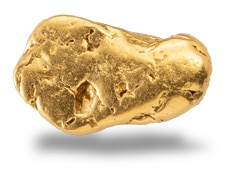
Gold is a dense, bright yellow colored element found in nature. Gold has the symbol AU (from the Latin: aurum) on the Periodic Table. Gold has many important properties. Gold is a good thermal and electrical conductor and is resistant to corrosion. It is a biocompatible metal - it's difficult to find anyone with sensitivity to pure gold. Gold is also is very soft and is commonly alloyed with other metals to increase its strength.
What is Karat Gold?
Karat gold is determined by the proportion of gold to alloy metal.
Gold is one of the softest and most malleable or pliable metals found on earth. Gold, in its purest form, is comprised of 100% gold with virtually no other metals added to it to strengthen it.
Karat gold is, by definition, the measure of its purity (or fineness) in proportion to alloy metal and is expressed in parts per thousand. Pure gold is 24 karat, which means it has a fineness of 1000. One karat is equal to 41.66 fineness.
Most Common Gold Karat Measurements
The various karat gold measurements are determined by the ratio of alloy metal to gold. The more gold an alloy contains, the higher the karat number. The most common karat gold densities are:
 24 Karat Gold - This is gold in its purest form. It is 100% gold, with virtually no alloy metals added to it. Gold that is 24 karat is very soft and rarely used in jewelry.
22 Karat Gold - This karat gold contains 91.7% pure gold. It is alloyed with metals including sterling silver, copper and zinc, however, it is still fairly soft. Often, sterling silver is plated with 22 karat gold to give it a brilliant golden color.
 18 Karat Gold - This alloy contains 75% pure gold and 25% alloy metals, like sterling silver or copper. This is a popular karat gold for jewelry, especially engagement and wedding jewelry, and features a lovely deep golden hue. It is considered to be the perfect balance of gold purity and strength.
 14 Karat Gold - The most popular karat gold used in jewelry, 14 karat gold features 58.3% pure gold with the balance alloy metals. This karat gold features a lovely medium-golden hue and is a favorite for engagement and wedding jewelry, along with earrings, necklaces and bracelets.
 10 Karat Gold - This karat gold contains 41.7 % pure gold. Since it contains more alloy metal, this is the lightest colored gold used in jewelry. This karat range is seen often in everyday jewelry and is usually very affordably priced.
What is a Gold Hallmark and What Does it Mean?
When you purchase an item made of karat gold, you will find a stamp, also called a gold hallmark, somewhere on the piece. It is stamped on the shank in rings and on the clasp for a necklace or bracelet. This hallmark indicates the gold karat strength used to create the design.
There are two different hallmarks that can be used to indicate gold karat or purity - the traditional hallmark and the modern hallmark. The traditional hallmark uses the gold purity percentage. Modern hallmarks are simply stamped with the karat weight, i.e., 14K.
| KARAT MEASURE | TRADITIONAL HALLMARK | MODERN HALLMARK | GOLD PURITY |
|---|---|---|---|
| 24 karat | - | - | 100% |
| 22 karat | 916 | 22K | 91.6% |
| 18 karat | 750 | 18K | 75.0% |
| 14 karat | 585 | 14K | 58.8% |
| 10 karat | 417 | 10K | 41.7% |
Gold Karat vs. Carat - What's the Difference?
Sometimes you will see the terms karat and carat used interchangeably. While this is technically correct, the terms measure different things.
A karat is a measurement of the proportion of gold in an alloy of 24 parts. A carat is a unit of weight used to measure the size of a gemstone, like a diamond, ruby or sapphire.
For this reason, you will see gold described as 10K, 14K, 18K or 22K, and you will see diamonds and gemstones measures as 1 ct., 2 ct., etc.